 Storm Mulan heads toward northern coast
Home > Policies
Legendary Ho Chi Minh Sea Trail
By VNA 12/13/2017 11:33 |
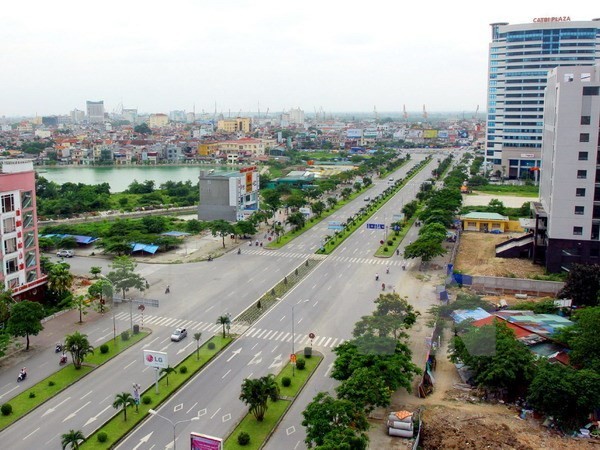
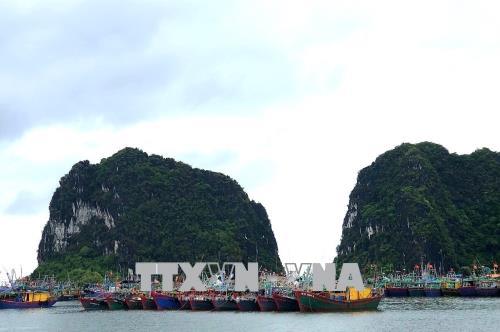
A corner of Hai Phong city (Photo VNA)
The northern coastal city of Hai Phong was home to the no-number pier K15, which was the departure position of the legendary Ho Chi Minh Sea Trail.
The pier K15 is not located in the foot of the Nghinh Phong Hill – one of the most beautiful landscapes in the Do Son tourist site.
According to Colonel Nguyen Van Diep, commander of the Hai Phong city’s military command, the city was one of the important areas receiving aid from socialist and peace-loving countries around the world during the anti- American resistance war between 1954 and 1975.
From the pier, the goods, especially weapons, were transported to battlefields.
Meeting the demand of the anti-American resistance war, in October 1961, the Politburo, the Central Military Commission and the Ministry of National Defence decided to set up a sea route for transporting weapons and equipment to southern and south central localities, in order to timely support southern battlefields in the fight against the enemy.
Colonel Nguyen Van Diep said the formation of the sea route was a unique, distinctive and creative feature of Vietnam’s people’s war, reflecting the strategic vision of the Party and President Ho Chi Minh.
It became a proud symbol of the whole nation, being the embodiment of the will and desire for independence, freedom and national reunification of the country as well as the willpower of the whole Party, people and army in the anti-American resistance war.
Implementing the Directive of the Politburo, the Central Military Commission, and the Ministry of National Defence, the Ministry of Transport assigned the Hai Phong City’s Party Committee and the municipal Administrative Committee to direct the Dockyard 1 (now Bach Dang Shipbuilding Industry Corporation) to choose the most reliable and skilled workers to build no-number ships. In August 1962, four wooden-hull ships were completed and delivered to Regiment 759 (now the Naval Brigade 125) to implement tasks.
In the evening of October 11, 1962, the first wooden-hull ship with the code name “Phuong Dong 1” with captain Le Van Mot and 12 officers and soldiers on board departed from the pier K15, bringing 30 tonnes of weapons to the southern battlefields. On October 16, 1962, the ship Phuong Dong 1 safely anchored at the Vam Lung wharf in the southernmost province of Ca Mau.
After that, the second, third and fourth ships performed the similar task to support the southern battle fields. The ships contributed to affirming the possibility of maintaining the strategic sea transport route in a long time.
However, it also demanded better vessels to serve transport in every weather condition.
The Dockyard 3 (now Tam Bac Shipbuilding Industry JSC) worked to build the first six steel-hull ships with the capacities of 50 and 100 tonnes. On March 17, 1963, the first steel-hull ship left the Pier K15, bringing weapons to the southern battlefields. Other steel-hull ships were launched and performed successfully their tasks.
As many as 50 no-number ships were built by the Bach Dang and Tam Bac shipbuilding companies during the war time.
In 2006, the Naval Service and relevant agencies official inaugurated a memorial stele of the no-number pier relic site and the Ho Chi Minh Sea Trail in the pier.
The site was recorgnised as a national historical site in 2008.
Nowadays, the municipal authorities and people are joining hands in building, developing and renovating the city, and promoting investment attraction, towards turning Hai Phong into a green, civilised and modern port city ahead of 2020.
Located 102 km from the capital city of Hanoi, Hai Phong, also known as the city of red flamboyant, is the third most populous city in the country, after Hanoi and Ho Chi Minh City, with nearly two million people. The largest seaport city in the north is also a land imprinting Vietnam’s resistance wars against foreign invaders during the nation’s 4000-year history, with victories on the Bach Dang river of Ngo Quyen in 938 and Tran Hung Dao in 1288. -VNA
Photo
Storm Mulan heads toward northern coast
 Storm Mulan heads toward northern coast
 Storm Mulan heads toward northern coast
 Storm Mulan heads toward northern coast